


Before you deposit a single satoshi into a no KYC crypto casino, you face two critical questions that could mean the difference between anonymous entertainment and serious legal or financial trouble. Will gambling without identity verification land you in legal hot water? And can you trust platforms that operate outside traditional regulatory frameworks with your cryptocurrency?
These aren’t paranoid questions. They represent legitimate concerns that every informed gambler should address before entering the world of anonymous crypto casinos. The promise of privacy-first gambling without document uploads sounds appealing until you consider the legal gray zones and potential security vulnerabilities that come with minimal oversight.
This comprehensive guide cuts through the marketing hype and addresses your concerns head-on. We’ll examine the complex legal landscape from multiple jurisdictions, assess the genuine security risks versus unfounded fears, identify red flags for dangerous operators, and provide a framework for making informed decisions about whether no KYC crypto casinos align with your risk tolerance and priorities.
By the time you finish reading, you’ll understand exactly where these platforms stand legally, how to evaluate their safety, and whether anonymous crypto gambling represents a reasonable choice for your situation. Let’s start by clarifying what we’re actually discussing when we talk about no KYC crypto casinos.
Understanding No KYC Crypto Casinos: What They Are and How They Work
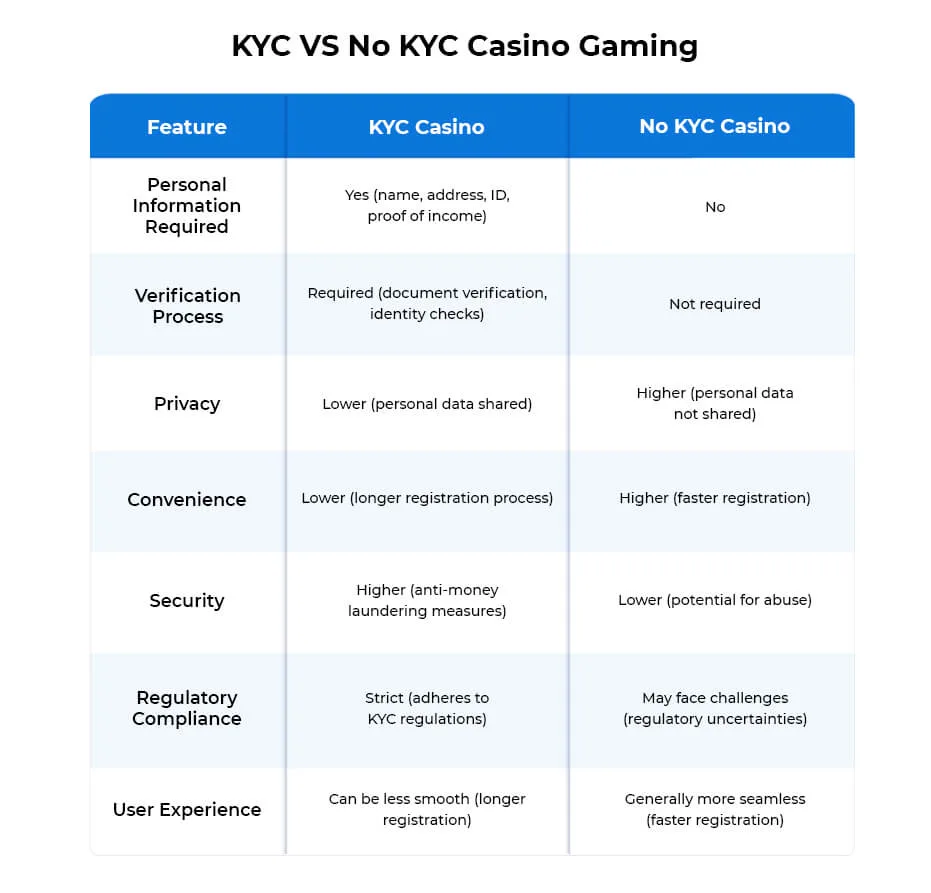
No KYC crypto casinos represent a fundamentally different approach to online gambling compared to the regulated platforms you might be familiar with. To assess their legality and safety, you first need to understand exactly what distinguishes them from traditional online casinos and why this distinction matters.
What KYC Means in Traditional Online Gambling
Know Your Customer (KYC) refers to the identity verification process that traditional online casinos use to confirm player identities. When you sign up at a regulated casino licensed in jurisdictions like the UK, New Jersey, or Malta, you’re required to submit government-issued identification documents such as a passport or driver’s license, proof of address through utility bills or bank statements, and sometimes verification of your payment methods through credit card photos or bank account screenshots.
These casinos run your documents through verification systems that check them against multiple databases, confirm authenticity, and cross-reference your information with sanctions lists, politically exposed persons databases, and self-exclusion registries. The entire process can take anywhere from several hours to several days, during which your ability to withdraw winnings remains restricted until verification completes.
How No KYC Casinos Operate Differently
No KYC crypto casinos eliminate this entire verification infrastructure. Instead of collecting personal information, these platforms authenticate users through their cryptocurrency wallet addresses. You connect your wallet, deposit crypto, and start playing immediately without submitting any documents or personal details beyond an email address.
Traditional KYC Casino Process
- Submit government-issued photo ID
- Provide proof of residence documents
- Verify payment methods with bank details
- Wait 1-7 days for verification approval
- Face withdrawal restrictions until approved
- Data stored indefinitely in casino databases
No KYC Crypto Casino Process
- Connect cryptocurrency wallet
- Provide email address only
- No document submission required
- Instant account activation
- Immediate withdrawals available
- Minimal personal data collection
This streamlined approach relies on blockchain technology for transaction verification rather than identity verification. The casino confirms you control the wallet sending funds, but doesn’t confirm your real-world identity. This creates both the appeal of anonymity and the concerns about accountability that we’ll explore throughout this analysis.
The Technology Enabling Anonymous Gambling

Several technological components make no verification casinos possible. Cryptocurrency itself provides pseudonymous transactions where wallet addresses substitute for personal identifiers. You can create and use crypto wallets without providing any personal information to blockchain networks.
Smart contracts automate deposits, bets, and withdrawals without human intervention, processing transactions based on code rather than requiring manual verification by compliance teams. This reduces operational costs significantly while enabling instant payouts that traditional casinos with their verification requirements cannot match.
Provably fair algorithms replace the trust model of regulated casinos with cryptographic verification. Instead of trusting a licensing authority has audited the games, you can independently verify that each game outcome wasn’t manipulated using blockchain-based verification systems. This creates a different kind of assurance than traditional regulation provides.
Offshore licensing jurisdictions provide the legal framework that permits this minimal-verification model. Unlike heavily regulated markets such as the United Kingdom or individual US states, jurisdictions like Curaçao, Costa Rica, and Anjouan issue gambling licenses with lighter Know Your Customer requirements. These licenses allow casinos to operate internationally while maintaining only basic player verification processes.
Why Casinos Choose the No KYC Model
Platforms adopt no verification approaches for several business reasons beyond just attracting privacy-conscious players. Operating without extensive KYC infrastructure dramatically reduces costs since casinos don’t need to pay for verification services, employ large compliance teams, or maintain databases of sensitive personal documents.
The model expands market access by accepting players from jurisdictions where traditional regulated casinos cannot operate. Players in countries with restrictive gambling laws or limited banking infrastructure can access these platforms using only cryptocurrency, expanding the potential customer base significantly.
Cryptocurrency transactions eliminate payment processing fees associated with credit cards, bank transfers, and e-wallets. Traditional payment processors charge merchants 2-5% per transaction plus additional fees for international transfers. Crypto reduces these costs to minimal blockchain network fees, savings that platforms can pass to customers through better bonuses and higher payout percentages.
The competitive advantage of instant withdrawals attracts players frustrated with traditional casinos where payouts can take 3-7 business days. When you can receive winnings in your wallet within minutes rather than days, that speed creates significant appeal for many gamblers.
Key Distinction: No KYC crypto casinos aren’t necessarily “unregulated” – many hold offshore gambling licenses with requirements that differ from heavily regulated jurisdictions. The question isn’t whether they have licenses, but whether those licenses provide adequate player protection. We’ll examine this distinction in depth when analyzing legal frameworks.
Understanding these operational foundations helps frame the legal and safety questions we’ll address next. The technology isn’t inherently dangerous, but the reduced oversight and accountability it enables creates both opportunities and risks that require careful evaluation.
The Legal Landscape: Are No KYC Crypto Casinos Actually Legal?
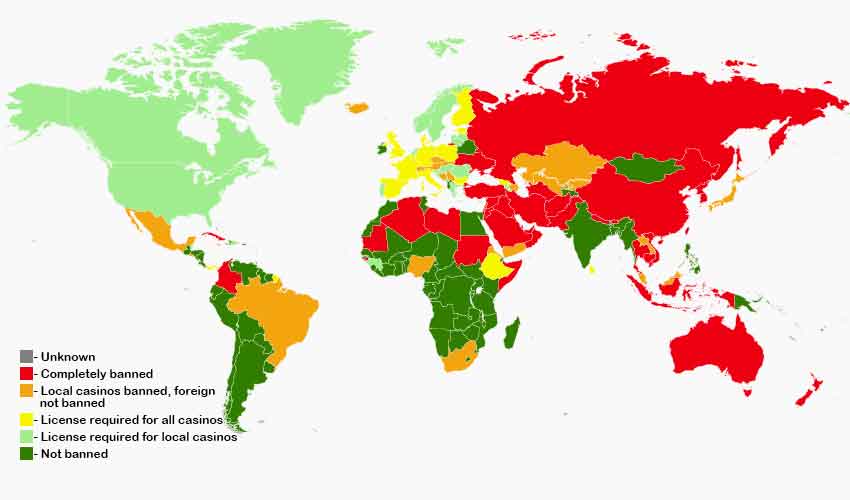
The legality of no KYC crypto casinos exists in a complex web of overlapping jurisdictions, conflicting regulations, and evolving legal frameworks. There’s no simple yes-or-no answer because legality depends on three distinct perspectives: where the casino is licensed, where you physically gamble, and how cryptocurrency is classified in your jurisdiction.
Understanding the Three-Layer Legal Framework
Legal analysis requires examining casino operations from multiple angles. First, we must consider the casino’s licensing jurisdiction and whether it legally permits operators to offer gambling services internationally with minimal KYC requirements. Second, we need to assess your local jurisdiction’s laws regarding online gambling participation. Third, cryptocurrency’s legal status affects whether using digital assets for gambling constitutes a separate legal issue.
These layers often conflict. A casino might be perfectly legal in its licensing country while players accessing it from other countries technically violate local gambling laws. Understanding these distinctions helps you assess your actual legal risk rather than relying on oversimplified claims that such platforms are either “legal” or “illegal.”
Offshore Licensing Jurisdictions Explained
The best no KYC casinos typically operate under licenses from offshore jurisdictions specifically structured to enable international online gambling with lighter regulatory requirements than major gambling markets. These jurisdictions issue licenses that provide legal authority for casino operations while imposing different standards than heavily regulated markets.
| Licensing Jurisdiction | KYC Requirements | Player Protection Level | Legal Standing |
| Curaçao eGaming | Minimal – often only for large withdrawals | Basic – complaints process exists | Legitimate but light-touch regulation |
| Costa Rica | Not mandated – casino discretion | Limited – business registration only | Legal business registration, not gaming-specific license |
| Anjouan | Flexible – minimal enforcement | Basic – emerging framework | Legitimate gambling license, crypto-friendly |
| Kahnawake | Conditional – risk-based approach | Moderate – established oversight | Long-standing jurisdiction, recognized internationally |
| Panama | Minimal – rarely enforced | Limited – business-focused regulation | Legal business framework, minimal gambling oversight |
Curaçao eGaming represents the most common licensing choice for kyc crypto casinos. This Caribbean jurisdiction issues Master Licenses that allow operators to sublicense their authority to multiple casinos. The regulatory framework requires basic fair gaming standards and some level of financial oversight, but KYC enforcement remains largely at casino discretion, particularly for cryptocurrency transactions.
Costa Rica takes a different approach entirely. Rather than issuing specific gambling licenses, the country allows companies to register as data processing businesses and operate casinos as a legal commercial activity. This provides legal standing without the regulatory oversight that characterizes actual gambling licenses. Many no verification casinos use this structure specifically because it imposes minimal compliance requirements.
Anjouan in the Comoros Islands has emerged recently as a crypto-friendly licensing option. This jurisdiction explicitly accommodates cryptocurrency gambling and imposes lighter verification requirements than traditional gambling markets. The licensing framework is newer and less tested than established jurisdictions, representing both opportunity and uncertainty.
Your Local Jurisdiction: The Player Perspective

Where you physically gamble matters more than where the casino is licensed when assessing your personal legal risk. Online gambling laws vary dramatically by country and even by state or province within countries. Understanding your local legal framework is essential for informed decision-making.
In the United States, online gambling legality depends on state law. States like New Jersey, Pennsylvania, and Michigan have legalized and regulated online casinos, but these legal options require strict KYC verification and only operate within state borders. Offshore casinos including no KYC crypto casinos operate in a federal gray zone where no specific law prohibits individual players from gambling on offshore platforms, though the platforms themselves cannot legally operate from US soil.
This creates a practical situation where millions of Americans use offshore gambling sites despite unclear legal status. Federal law primarily targets operators and payment processors rather than individual players. No player has ever been federally prosecuted simply for gambling on offshore casino sites, though this lack of enforcement doesn’t guarantee immunity or create explicit legal protection.
The United Kingdom prohibits gambling on unlicensed sites, requiring all online casinos serving UK players to hold UK Gambling Commission licenses. These licenses mandate comprehensive KYC verification, making legitimate no KYC options unavailable to UK players through legal channels. Using unlicensed offshore casinos technically violates UK law, though enforcement focuses primarily on unlicensed operators rather than individual players.
Canada generally permits online gambling on offshore sites in most provinces, with regulation primarily at provincial rather than federal level. Provincial gambling authorities license some domestic online casinos, but no law explicitly prohibits Canadians from using international gambling sites including anonymous Best No KYC Crypto Casinos.
Australia technically prohibits online casinos entirely, though the Interactive Gambling Act primarily targets operators offering services to Australian residents rather than prosecuting individual players. This creates another gray zone where anonymous online casinos remain accessible despite unclear legal standing.
Legal Disclaimer: This information provides educational overview only and does not constitute legal advice. Online gambling laws change frequently and vary by specific location. Consult a qualified attorney in your jurisdiction for advice regarding your specific situation before gambling on any platform.
Cryptocurrency’s Legal Status and Gambling
The use of cryptocurrency for gambling introduces an additional legal dimension. Some jurisdictions that permit online gambling with traditional currencies restrict or prohibit cryptocurrency gambling specifically. Others treat crypto gambling identically to fiat gambling from a legal perspective.
In the United States, cryptocurrency is generally treated as property rather than currency for legal purposes. This classification doesn’t specifically prohibit gambling with crypto, but it does create potential tax implications we’ll address later. State gambling laws rarely distinguish between crypto and traditional currencies when defining gambling, suggesting that crypto gambling faces the same legal framework as fiat gambling in most US jurisdictions.
The European Union’s approach varies by member state. Some countries have explicitly addressed cryptocurrency gambling in updated regulations, while others apply existing gambling law to crypto platforms without specific crypto provisions. The EU’s Markets in Crypto-Assets (MiCA) regulation focuses on crypto itself rather than gambling specifically, leaving gambling regulation to individual member states.
China prohibits both cryptocurrency and online gambling, making no KYC crypto casinos doubly illegal for Chinese residents. The government actively blocks access to offshore gambling sites and cryptocurrency exchanges, reflecting strict prohibition rather than gray-zone tolerance.
The Gray Zone Reality
For most players in Western countries, no KYC crypto casinos operate in legal gray zones rather than clear prohibition or explicit permission. These platforms maintain legal standing through offshore licenses while serving customers in jurisdictions where online gambling exists in ambiguous legal territory.
This gray zone status means you face minimal practical legal risk as an individual player, as authorities focus enforcement on operators rather than customers. However, gray zone status also means you receive limited legal protection if disputes arise, cannot pursue legal recourse through local courts, and might face complications if gambling winnings attract regulatory attention.
Your Legal Risk Level
- Individual player prosecution is extremely rare
- Enforcement targets operators, not players
- No documented cases of players prosecuted federally in US
- Local laws vary – research your specific jurisdiction
Your Legal Protection Level
- Cannot pursue disputes through local courts
- Limited recourse if casino refuses withdrawals
- No regulatory authority to file complaints with
- Self-exclusion programs unavailable
- Problem gambling resources limited
Understanding that legal risk and legal protection represent two different considerations helps frame informed decisions. You might face minimal risk of prosecution while simultaneously receiving minimal protection if problems arise. This trade-off characterizes anonymous gambling’s legal landscape and should factor into your evaluation of whether these platforms suit your needs.
Tax Implications of Anonymous Gambling

Even when gambling itself occupies gray legal territory, tax obligations typically remain clear. Most tax jurisdictions require reporting all gambling winnings regardless of whether the gambling platform reports them to authorities.
In the United States, all gambling winnings are taxable income that must be reported on your federal tax return. The lack of KYC at Best No KYC Crypto Casinos means they won’t send you tax forms like regulated casinos do, but this doesn’t eliminate your reporting obligation. The IRS treats cryptocurrency gambling winnings as taxable income, with cryptocurrency classified as property meaning you potentially face capital gains calculations in addition to gambling income reporting.
The anonymous nature of no KYC casinos creates practical enforcement challenges for tax authorities but doesn’t change legal obligations. Depositing significant cryptocurrency gambling winnings to exchanges or converting to fiat currency creates transaction records that could prompt questions if audited. Maintaining records of deposits, withdrawals, and sessions helps document your positions if questions arise.
Other countries apply different frameworks. The United Kingdom doesn’t tax gambling winnings, eliminating this concern entirely for UK residents. Canada treats gambling winnings as tax-free for recreational players, though professional gamblers may face different treatment. Australia similarly doesn’t tax gambling winnings for recreational players.
Understanding your jurisdiction’s tax laws regarding gambling income helps you maintain legal compliance even when gambling on platforms that don’t report to authorities. Tax evasion represents a more serious legal risk than the gambling itself for many players in anonymous casino spaces.
Examples of Platforms Operating Under Offshore Licenses
Now that you understand the legal framework, examining specific platforms that operate under the offshore licensing structures discussed above provides concrete examples of how these regulations work in practice. The following casinos demonstrate different approaches to no KYC operations while maintaining licenses from recognized offshore jurisdictions.

BetPanda
9.5
Legal Standing
9.0/10
Security Features
9.5/10
BetPanda operates under a Costa Rica business registration framework and demonstrates how platforms can provide no KYC access while maintaining legitimate business standing. The platform accepts 13 cryptocurrencies and processes withdrawals instantly without requiring identity verification for standard transactions.
- Costa Rica licensed with transparent terms
- Bitcoin Lightning Network integration for fast payments
- Provably fair games with verifiable algorithms
- 10% weekly cashback with no wagering requirements
- Reserves right to request KYC for large withdrawals only
Legal Note: Costa Rica registration provides business legitimacy but differs from dedicated gambling licenses in oversight level.
Visit BetPanda

BC.Game
9.8
Legal Standing
9.6/10
Security Features
10/10
BC.Game operates under an Anjouan gaming license and represents a larger-scale implementation of the no KYC model. Supporting over 150 cryptocurrencies, the platform demonstrates how offshore licensing can accommodate extensive crypto gambling operations while maintaining basic regulatory oversight.
- Anjouan licensed with established operational history
- Supports 150+ cryptocurrencies including privacy coins
- Built-in crypto exchange for seamless conversions
- Extensive provably fair game library
- KYC rarely triggered except for compliance red flags
Legal Note: Anjouan licensing provides more structured oversight than business registration while remaining crypto-friendly.
These examples illustrate how different offshore licensing approaches work in practice. While both platforms offer no KYC gambling, their legal frameworks differ in structure and oversight level. Understanding these distinctions helps you evaluate which licensing approach provides the legitimacy and protection level you require.
Transparency Notice: The platforms above are provided as examples of licensed offshore operators discussed in legal analysis. Links may include affiliate tracking codes. Always conduct your own research and consult legal counsel regarding gambling laws in your jurisdiction before using any gambling platform.
Safety Assessment: Real Risks vs. Unfounded Fears

Legal gray zones don’t automatically mean safety compromises, but the reduced oversight at no KYC crypto casinos does create different risk profiles than heavily regulated platforms. Separating legitimate security concerns from misconceptions helps you assess whether these platforms can meet your safety requirements.
The Security Advantages of No KYC Platforms
Counterintuitively, no verification casinos offer certain security advantages compared to traditional platforms. The minimal data collection inherent to the no KYC model creates smaller attack surfaces for hackers targeting personal information. When casinos don’t collect passports, driver’s licenses, social security numbers, and address documents, data breaches cannot expose what doesn’t exist in databases.
Traditional online casinos have suffered numerous major data breaches exposing millions of players’ personal documents. In 2023 alone, several major operators experienced breaches that compromised customer identification documents, payment information, and personal details. Players at no KYC casinos face minimal exposure to identity theft through casino breaches since the platforms hold limited personal data to compromise.
Cryptocurrency transactions provide additional security through blockchain immutability and transparency. Every transaction gets recorded on public ledgers that cannot be altered retroactively, creating verifiable transaction histories. While wallet addresses don’t reveal personal identities, the transaction history itself becomes permanently documented and verifiable by anyone.
Provably fair gaming represents another security advantage unique to the Best No KYC Crypto Casinos. Rather than trusting that a licensing authority has audited random number generators, provably fair systems allow you to cryptographically verify that game outcomes weren’t manipulated after bets were placed. This transparency exceeds what traditional regulated casinos provide since you can independently verify fairness rather than relying on third-party audits.
The Genuine Security Risks

The security advantages don’t eliminate serious risks that accompany reduced regulatory oversight. The anonymous nature of crypto transactions creates opportunities for malicious operators that wouldn’t exist with regulated platforms requiring extensive verification.
Exit scam risk represents the primary danger at anonymous crypto casinos. Because operators face minimal accountability and players have limited recourse, unscrupulous platforms can accumulate player deposits then disappear with the funds. This happened with several crypto casinos in recent years that operated for months accepting deposits before suddenly ceasing operations and stealing customer funds.
The irreversible nature of cryptocurrency transactions amplifies this risk. If you deposit Bitcoin to a scam casino, no chargeback mechanism exists to recover your funds. Traditional payment methods like credit cards provide consumer protections through chargeback processes that don’t apply to crypto transactions. Once your crypto leaves your wallet, recovering it requires the recipient’s voluntary cooperation.
Selective payout refusal poses another risk at platforms with minimal oversight. Some operators pay small withdrawals promptly to build trust but refuse or endlessly delay large withdrawal requests through manufactured excuses. Without regulatory authorities to appeal to, players facing withdrawal refusals have extremely limited recourse beyond public complaints and negative reviews.
Smart contract vulnerabilities create technical risks that traditional casinos don’t face. Platforms using smart contracts for game logic or payment processing may contain bugs that hackers can exploit to drain funds or manipulate games. While less common than exit scams, several crypto gambling platforms have suffered smart contract exploits resulting in significant losses.
Security Benefits
- Minimal personal data collection reduces identity theft risk
- No document storage means no documents to compromise in breaches
- Blockchain transparency provides verifiable transaction histories
- Provably fair games allow independent fairness verification
- Cryptocurrency custody reduces payment processor vulnerabilities
Security Risks
- Exit scam potential with minimal operator accountability
- Irreversible transactions eliminate chargeback protections
- Selective withdrawal refusal with limited player recourse
- Smart contract vulnerabilities may enable fund theft
- Reduced regulatory oversight means less operator vetting
- Cryptocurrency volatility affects fund value
Red Flags for Dangerous Operations
Identifying untrustworthy operators before depositing funds represents your primary defense against the risks outlined above. Certain warning signs reliably indicate platforms likely to cause problems, allowing you to avoid dangerous operators entirely.
Licensing and Transparency Red Flags
Platforms claiming licenses but providing no verifiable license numbers or displaying licenses from non-existent authorities should trigger immediate concern. Legitimate offshore licenses are verifiable through the licensing authority’s website where you can confirm the operator’s license status. Fake or non-existent licenses indicate operators willing to lie about basic legitimacy.
Anonymous ownership without any disclosed company information represents another serious warning sign. While crypto casinos emphasize player anonymity, the platforms themselves should provide transparent company information including corporate structure, management team, and contact details. Completely anonymous operators have minimal incentive to maintain reputation or treat players fairly.
Missing or vague terms and conditions especially regarding withdrawals suggest platforms reserving ability to refuse payouts arbitrarily. Legitimate casinos provide detailed, specific terms outlining exactly what circumstances might trigger KYC requests, withdrawal limits, and payout processing timelines. Vague terms like “reserves right to request additional information” without specific criteria suggest selective enforcement targeting winners.
Operational Red Flags

Impossibly generous bonuses that far exceed industry standards often indicate platforms planning to refuse withdrawals through manufactured terms violations. When welcome bonuses offer 500% matches or “risk-free” promotions that sound too good to be true, they usually are. Legitimate casinos offer competitive bonuses within reasonable industry ranges rather than astronomical offers designed to attract victims.
Absence of recognizable game providers suggests platforms using unlicensed or pirated game software. Reputable slot developers like Pragmatic Play, NetEnt, and Evolution Gaming don’t license games to unlicensed operators. If a casino’s game library consists entirely of obscure or generic titles without recognized provider branding, the games themselves may be unfair or manipulated.
No SSL encryption as indicated by the absence of the padlock symbol in your browser’s address bar represents a fundamental security failure. Every legitimate online casino encrypts communications between your browser and their servers using SSL/TLS certificates. Missing encryption means your login credentials and any information you submit travels unencrypted across the internet where it can be intercepted.
Exclusively positive reviews without any criticism may indicate fake review manipulation. Every casino accumulates some negative feedback from players experiencing issues or dissatisfied with specific aspects. Platforms with nothing but glowing reviews across every site likely purchased fake reviews or operate too recently to have accumulated genuine player feedback.
Community and Reputation Red Flags
No presence in gambling communities and forums suggests platforms avoiding scrutiny. Legitimate casinos develop reputations over time through discussion on Reddit, gambling forums, and review sites. Complete absence from these discussions might indicate new operations without track records or platforms aware that community scrutiny would reveal problems.
Pattern of unresolved player complaints on review sites and forums indicates systematic issues with withdrawal processing or customer service. One or two complaints from players violating terms doesn’t necessarily indicate problems, but consistent patterns of similar complaints about withdrawal refusals or unresponsive support suggest systemic issues.
Aggressive affiliate marketing through spam and unsolicited emails indicates desperation to attract players that legitimate platforms don’t need. Reputable casinos rely on organic growth and targeted advertising rather than spam campaigns. Receiving unsolicited gambling promotions for specific casinos suggests those platforms struggle to attract players through legitimate channels.
Critical Warning: If a platform displays multiple red flags from this list, avoid it entirely regardless of promotional offers or claimed features. The risk of losing your deposit far outweighs any potential benefits. Hundreds of legitimate alternatives exist without these warning signs.
Evaluating Security Measures at Legitimate Platforms
Once you’ve screened out obvious scams using the red flag checklist, evaluating security implementations at legitimate-seeming platforms helps identify the safest options. Best kyc casinos without verification implement multiple security layers that distinguish them from minimum-effort operations.
Technical Security Indicators
Strong SSL/TLS encryption using current protocols represents baseline security that every legitimate casino implements. Check for the padlock symbol in your browser’s address bar and verify the certificate is issued to the casino’s domain name rather than a generic or mismatched certificate.
Two-factor authentication availability for account access adds significant protection against unauthorized access. The best platforms offer 2FA options using authenticator apps or SMS verification, allowing you to require a second verification factor beyond passwords for logging in or processing withdrawals.
Cold wallet storage for majority of player funds limits hot wallet vulnerability. Platforms that keep most cryptocurrency in offline cold wallets insulated from internet access protect the bulk of player funds even if hot wallets used for active transactions get compromised. Transparent casinos disclose their hot wallet and cold wallet distribution approaches.
Regular security audits by third-party firms provide independent verification of platform security. While less common at no KYC platforms than traditional casinos, some operators undergo penetration testing and security reviews by specialized firms. Public disclosure of these audits demonstrates security commitment.
Financial Security Indicators

Reasonable withdrawal limits prevent casino insolvency concerns. Platforms offering completely unlimited withdrawals may lack funds to cover large winner payouts. Transparent limits like weekly or monthly withdrawal caps in the $10,000-$100,000 range suggest platforms with adequate liquidity while protecting against money laundering abuse.
Withdrawal processing speeds provide insight into financial stability. Casinos processing crypto withdrawals within minutes to hours demonstrate confidence in their ability to fulfill obligations. Platforms requiring 24-72 hours for crypto withdrawals that should process near-instantly may face liquidity issues.
Transparent bankroll management and reserve funds disclosure distinguishes well-capitalized platforms from underfunded operations. While rare, some crypto casinos disclose reserve fund addresses on blockchain explorers allowing independent verification of financial strength.
Game Fairness Verification
Provably fair game certification allows independent verification that game outcomes aren’t manipulated. Legitimate provably fair implementations provide you with seed values and algorithms enabling you to personally verify that results were predetermined before your bet rather than generated based on your stake size.
Recognized game providers indicate legitimate software licensing. Slots and live dealer tables from established providers like Pragmatic Play, Evolution Gaming, and Hacksaw Gaming come from companies that vet their casino partners and refuse to work with unlicensed operators. Presence of recognized provider games suggests platform legitimacy.
Published RTP percentages demonstrate transparency about house edge. Casinos disclosing return-to-player percentages for games show willingness to operate transparently rather than hiding the mathematical advantages they hold. Independently audited RTP verification provides even stronger assurance.
Platforms Demonstrating Strong Security Measures
Having established the security evaluation framework, examining specific platforms that implement the safety measures discussed above provides concrete examples of what robust security looks like at no verification casinos. These casinos demonstrate different approaches to balancing anonymity with player protection.
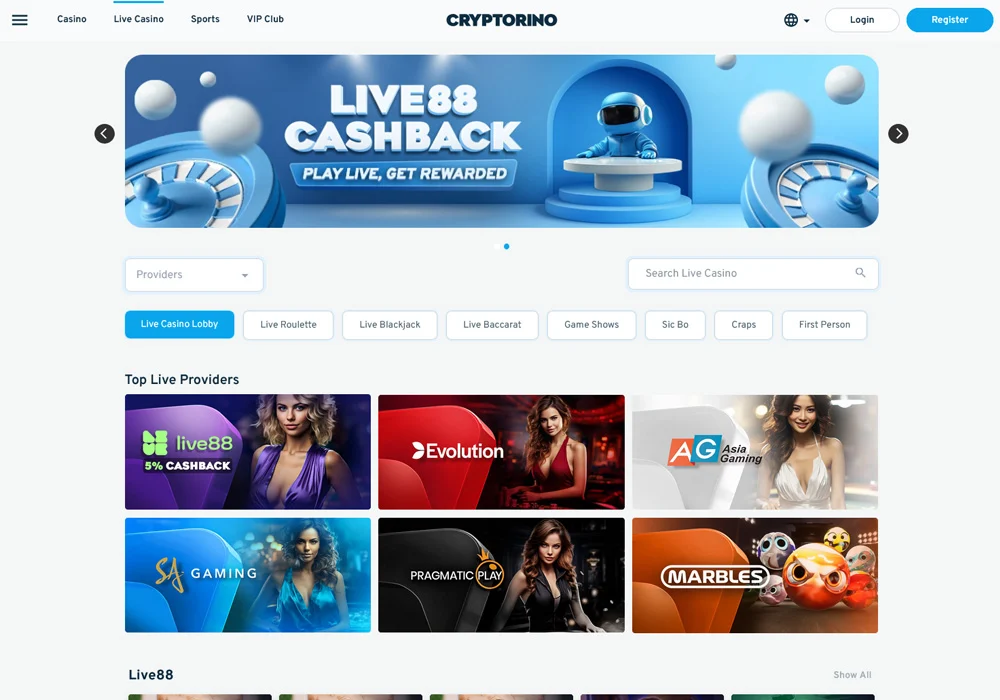
Cryptorino
9.6
Security Implementation
9.6/10
Transparency
9.2/10
Cryptorino demonstrates comprehensive security implementation including cold storage for player funds, two-factor authentication options, and instant withdrawal processing that indicates strong liquidity. Operating under Costa Rica registration, the platform has processed millions in withdrawals without reported issues.
- 256-bit SSL encryption across entire platform
- Two-factor authentication available for account security
- Cold wallet storage for majority of player cryptocurrency
- Instant withdrawal processing proves financial stability
- Provably fair games with seed verification
- Transparent terms clearly outlining all policies
- 6,000+ games from recognized providers
Security Highlight: Zero casino fees on transactions and instant payouts demonstrate confidence in financial position.
Visit Cryptorino
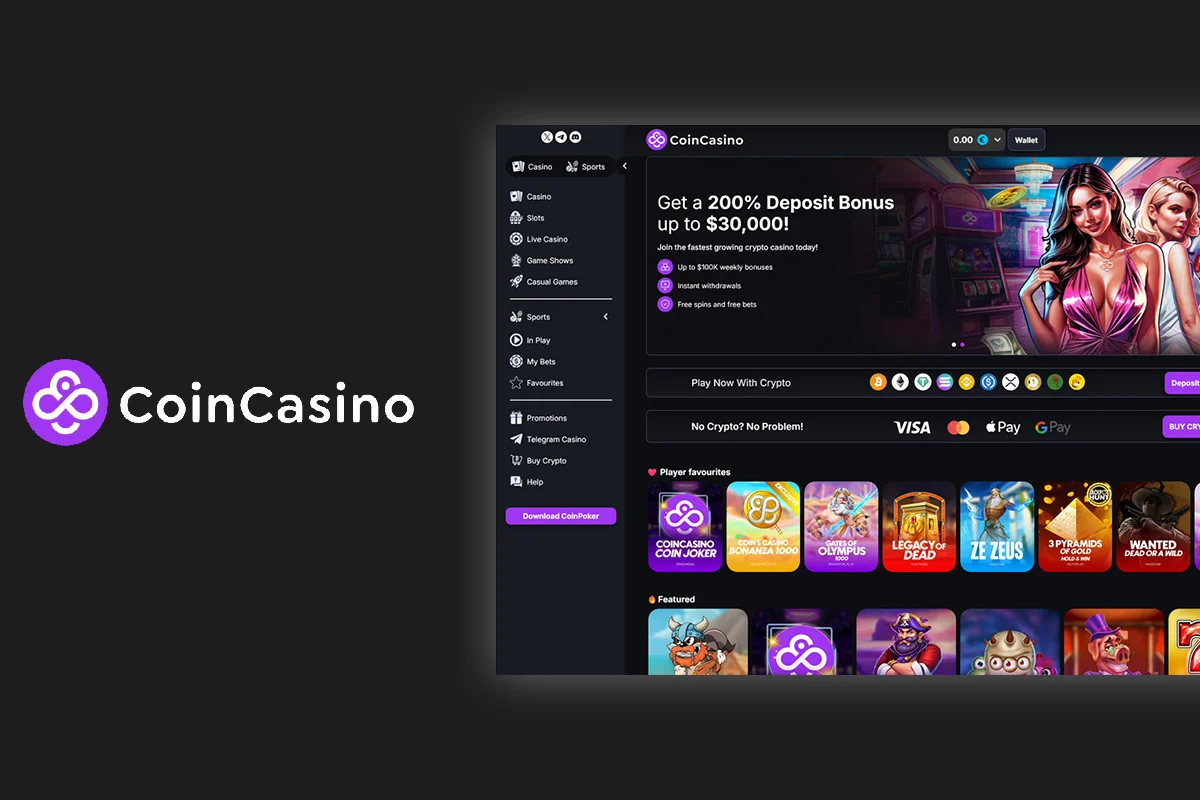
CoinCasino
9.7
Security Implementation
9.8/10
Financial Strength
9.6/10
CoinCasino’s high withdrawal limits up to $500,000 monthly demonstrate exceptional financial strength and security confidence. The platform combines Costa Rica licensing with robust technical security and transparent operational practices that distinguish it as one of the safest no KYC options available.
- Supports 20+ cryptocurrencies for maximum flexibility
- $500,000 monthly withdrawal limit proves financial strength
- Instant to 24-hour withdrawal processing
- Dedicated mobile apps for Android and iOS
- 4,000+ games including exclusive Plinko and Crash
- Clear terms without hidden withdrawal restrictions
- Established track record since 2024
Security Highlight: Exceptionally high withdrawal limits indicate strong financial backing and confidence in operations.
Visit CoinCasino

Lucky Block
9.4
Security Implementation
9.0/10
VIP Protection
9.8/10
Lucky Block’s 11-tier loyalty program demonstrates commitment to long-term player relationships that exit scam operations never develop. The platform’s VIP structure including personal managers for high-level players indicates legitimate operations planning sustained business rather than quick exits.
- 11-tier VIP program with progressive benefits
- Personal VIP managers for tier 6+ players
- 20% cashback for top VIP levels
- Supports 20+ cryptocurrencies including privacy coins
- Telegram integration for convenient anonymous access
- 4,000+ games from recognized providers
- Transparent instant withdrawal processing
Security Highlight: Sophisticated VIP program structure indicates long-term operational commitment inconsistent with scam operations.
Visit Lucky Block
These platforms illustrate how legitimate anonymous crypto casinos implement security measures that protect players despite operating outside heavily regulated frameworks. While they cannot provide the regulatory protections of licensed US or UK casinos, their technical security, financial transparency, and operational track records offer reasonable assurance for informed players willing to accept the trade-offs inherent to anonymous gambling.
Research Reminder: The platforms above demonstrate strong security implementations based on the criteria discussed. However, you should conduct independent research including checking recent player feedback before depositing funds at any gambling platform. Links may contain affiliate codes. This constitutes information sharing, not endorsement.
Making an Informed Decision: Is No KYC Crypto Gambling Right for You?

Understanding legal frameworks and security risks provides the foundation for informed decision-making, but determining whether no KYC crypto casinos suit your needs requires honest self-assessment of your priorities, risk tolerance, and gambling patterns.
When No KYC Casinos Make Sense
Certain player profiles and situations align well with what anonymous crypto casinos offer. If privacy represents your highest priority and you’re willing to accept reduced regulatory protection in exchange for anonymity, these platforms deliver on their core promise. Players in jurisdictions where regulated gambling options aren’t available or where banking systems restrict gambling transactions find crypto casinos provide access that traditional platforms cannot match.
Cryptocurrency enthusiasts who hold significant crypto portfolios and prefer keeping funds in digital assets rather than converting to fiat currency benefit from platforms that accept and pay out exclusively in crypto. The ability to gamble without exposing cryptocurrency holdings to bank scrutiny or creating taxable conversion events appeals to many crypto investors.
Players frustrated with slow withdrawal processing at traditional casinos appreciate the instant payout capability that best crypto casino platforms with no verification provide. When you can receive winnings in your wallet within minutes rather than waiting 3-7 business days for bank transfers, that speed creates tangible benefits.
Smaller stake recreational players face minimal risk exposure since any potential losses remain limited to entertainment budgets. If you typically deposit $50-$200 per session and wouldn’t be financially devastated by complete loss of a deposit, the risk profile becomes acceptable for entertainment value received.
Good Fit Indicators
- Privacy is your highest priority
- You hold cryptocurrency already
- Traditional casinos unavailable in your jurisdiction
- You gamble recreationally with small stakes
- You research platforms thoroughly before depositing
- You can accept reduced recourse if problems arise
- You understand and accept legal gray zones
Poor Fit Indicators
- You need legal certainty and regulatory protection
- You’re unfamiliar with cryptocurrency
- You gamble with significant amounts you can’t afford to lose
- You need robust responsible gambling tools
- You want self-exclusion program access
- You prefer traditional banking methods
- You need guaranteed dispute resolution processes
When Traditional Regulated Casinos Are Better Choices
Despite their limitations, traditional online casinos with KYC verification provide advantages that no KYC platforms cannot match. If legal certainty matters more than privacy, regulated casinos operating under US state licenses or UK Gambling Commission oversight offer unambiguous legal standing that eliminates concerns about gray zones.
Players who gamble with substantial amounts that would represent significant losses if stolen face better risk profiles at regulated platforms. When deposits reach thousands of dollars, regulatory protections including mandatory segregated player accounts, regular financial audits, and formal dispute resolution processes provide valuable safeguards worth trading some privacy to obtain.
Problem gambling concerns make regulated casinos with comprehensive responsible gambling tools the clearly superior choice. Features like deposit limits, self-exclusion programs, reality checks, and mandatory cooling-off periods help protect vulnerable players in ways that anonymous casinos with minimal accountability cannot match.
Players uncomfortable with cryptocurrency’s technical requirements and volatility find traditional banking methods more suitable. Not everyone wants to learn about wallet management, seed phrases, and blockchain confirmations. Regulated casinos accepting credit cards and bank transfers provide simpler, more familiar payment experiences.
Hybrid Approaches and Risk Mitigation

You don’t face a binary choice between exclusively using no KYC casinos or avoiding them entirely. Many experienced players employ hybrid strategies that leverage the advantages of different platform types while mitigating their respective weaknesses.
Diversifying across both anonymous crypto casinos for smaller recreational sessions and regulated platforms for larger gambling sessions spreads risk while maintaining flexibility. You might use no verification casinos for quick entertainment sessions with modest stakes while reserving serious gambling for regulated platforms with stronger protections.
Starting with small deposits at new platforms before increasing stakes allows you to verify withdrawal processing and customer service quality with minimal risk exposure. Successful withdrawal of an initial small deposit provides stronger assurance than marketing claims or reviews alone.
Maintaining cryptocurrency in your own wallets rather than leaving large balances in casino accounts limits exposure to platform-specific risks. Only keeping enough cryptocurrency in casino wallets to cover your immediate gambling session protects the majority of your funds even if a casino experiences problems.
Responsible Gambling Considerations
The reduced oversight at no KYC casinos creates heightened responsibility for self-monitoring gambling behavior. Without regulatory requirements for responsible gambling tools, these platforms rarely offer robust protection features for problem gambling. This places greater burden on players to recognize and address problematic patterns.
Setting personal deposit limits before starting gambling sessions helps maintain control in environments without platform-enforced restrictions. Decide in advance how much you’re willing to risk and transfer only that amount to your casino wallet. The extra friction of additional deposits creates natural pause points for reconsidering continued play.
Tracking wins and losses accurately becomes especially important given that casinos without KYC won’t provide detailed tax documentation. Maintaining personal records helps you understand your actual gambling results rather than relying on selective memory that often overestimates wins and underestimates losses.
Recognizing warning signs of problem gambling remains critical regardless of platform type. Chasing losses, gambling with money needed for bills, neglecting responsibilities to gamble, or feeling unable to stop all indicate problems requiring intervention. Organizations like the National Council on Problem Gambling provide confidential support at 1-800-GAMBLER regardless of where you gamble.
Responsible Gambling Resources: If gambling stops being entertainment and starts causing problems, help is available. Contact the National Council on Problem Gambling at 1-800-GAMBLER (1-800-426-2537) or visit their website for confidential support. Problem gambling affects people regardless of platform type or legal status.
Tax Reporting Obligations

Regardless of legal gray zones surrounding gambling itself, tax obligations typically remain clear and non-negotiable. In most jurisdictions, gambling winnings constitute taxable income that must be reported even when platforms don’t issue tax documents.
United States taxpayers must report all gambling winnings on federal tax returns regardless of whether casinos report them to the IRS. The lack of KYC at crypto casinos means you won’t receive forms like W-2G that traditional casinos issue for large wins, but this doesn’t eliminate reporting requirements. Cryptocurrency gambling winnings face additional complexity since crypto is treated as property, potentially creating capital gains calculations in addition to gambling income reporting.
Maintaining detailed records of all gambling sessions including deposits, withdrawals, and session outcomes helps document your positions if questioned. Cryptocurrency transactions create permanent blockchain records that authorities can potentially trace, making accurate recordkeeping both easier and more important than with cash gambling.
Depositing significant cryptocurrency gambling winnings to exchanges or converting to fiat currency creates transaction records that could prompt questions during audits. Having documentation showing legitimate gambling activity rather than other potentially problematic income sources protects you if authorities inquire about large cryptocurrency movements.
Other jurisdictions apply different tax treatment. United Kingdom residents don’t pay tax on gambling winnings, eliminating this concern entirely. Canadian and Australian recreational gamblers similarly receive tax-free treatment for gambling income. Understanding your specific jurisdiction’s approach helps ensure compliance.
The Legal Risk vs. Protection Trade-Off
The fundamental trade-off with kyc crypto casino platforms involves exchanging minimal legal risk for minimal legal protection. As detailed in our legal analysis, individual players face extremely low prosecution risk for using offshore gambling sites since enforcement targets operators rather than customers. No documented cases exist of US players facing federal prosecution simply for gambling on offshore platforms.
However, this low legal risk comes packaged with equally low legal protection. Operating outside heavily regulated frameworks means you cannot pursue disputes through local courts, file complaints with regulatory authorities, or expect government intervention if casinos treat you unfairly. You’re largely on your own for ensuring platform trustworthiness and resolving any problems.
This trade-off works well for players who prioritize privacy and accept responsibility for careful platform selection. It works poorly for players who want or need regulatory safety nets including formal dispute resolution, mandatory fair treatment standards, and government oversight ensuring operator accountability.
Final Assessment Framework
Before depositing at any no KYC crypto casino, work through this assessment framework to determine whether the decision aligns with your situation:
- Have you researched online gambling laws in your specific jurisdiction?
- Are you comfortable operating in legal gray zones?
- Do you understand your tax obligations?
- Have you consulted legal counsel if needed?
- Can you afford to lose your entire deposit?
- Are your stakes appropriate for entertainment budgets?
- Have you verified the platform’s financial strength?
- Do you understand cryptocurrency volatility risks?
- Are you familiar with cryptocurrency wallets?
- Do you understand transaction fees and confirmations?
- Can you verify provably fair games?
- Have you secured your accounts with 2FA?
- Do you gamble within entertainment budgets?
- Can you self-impose limits without platform tools?
- Do you recognize problem gambling warning signs?
- Have you considered if regulated casinos suit you better?
Honest answers to these questions provide clarity on whether no KYC crypto casinos represent reasonable choices for your specific situation. There’s no universally correct answer since different players have different priorities and risk tolerances. What matters is making informed decisions based on accurate understanding rather than marketing claims or incomplete information.
Practical Guide: Choosing a Safe No KYC Crypto Casino

If you’ve decided that no verification casinos align with your needs and risk tolerance, implementing a systematic evaluation process before depositing funds dramatically reduces your risk of encountering problematic operators. This practical framework helps you separate legitimate platforms from dangerous scams.
Pre-Deposit Research Checklist
Never deposit at a crypto casino until you’ve completed this comprehensive verification process. The time invested in research provides insurance against losses that dwarf any promotional bonuses you might chase by rushing.
Step 1: Verify Licensing Claims
Start by confirming that the casino’s licensing claims are legitimate. Look for license information typically displayed in the website footer. Legitimate casinos provide license numbers and link to their licensing authority’s website. Visit the licensing authority’s site and verify the operator’s license status independently rather than trusting information displayed on the casino’s own site.
For Curaçao licenses, check the Curaçao Gaming Control Board website and confirm the master license holder. The casino should display a validation seal that links to verification page. Costa Rica operations should provide business registration numbers you can verify through Costa Rica’s public registry. Anjouan licensees should appear in the Anjouan Gaming Commission’s public records.
If you cannot independently verify licensing claims through official authority websites, treat the casino as unlicensed regardless of seals or numbers displayed on their site. Fake licenses are common among scam operations.
Step 2: Research Operator Reputation
Search for the casino name on gambling forums including Reddit, AskGamblers, BitcoinTalk, and dedicated crypto casino discussion forums. Look for patterns in player feedback rather than isolated complaints. Every casino accumulates some negative reviews, but consistent patterns of withdrawal refusals, unresponsive support, or suspicious behavior indicate systematic problems.
Pay special attention to how casinos respond to complaints. Legitimate operators engage with criticism and attempt resolution. Platforms that ignore complaints or respond defensively without addressing issues demonstrate poor customer service culture.
Check review sites but maintain skepticism about perfect ratings. Fake positive reviews plague gambling review sites, with some casinos purchasing manufactured praise. A mix of positive and negative reviews with specific details suggests authentic feedback more than universal five-star ratings.
Search for the casino name plus “scam,” “refuses withdrawal,” or “won’t pay” to find red flag discussions. If numerous players report similar problems, those warnings deserve serious weight regardless of positive marketing you’ve encountered.
Step 3: Analyze Terms and Conditions

Read the complete terms and conditions with particular attention to withdrawal policies, KYC trigger conditions, and bonus terms. Legitimate casinos provide specific, detailed terms that clearly outline all policies. Vague language like “reserves right to request additional verification” without specific criteria suggests arbitrary enforcement targeting winners.
Identify maximum withdrawal limits and processing timelines. Reasonable limits in the $5,000-$50,000 per week range indicate financial stability. Suspiciously low limits like $500 maximum weekly withdrawals suggest platforms that make cashing out difficult intentionally.
Examine bonus wagering requirements and game contribution percentages. Industry-standard ranges fall between 30x-50x wagering with most slots contributing 100%. Requirements exceeding 60x or complex contribution tables favoring house-edge games indicate player-unfriendly terms designed to prevent withdrawals.
Look for unclear or contradictory terms regarding when KYC might be required. The best platforms explicitly state they reserve KYC rights for suspicious activity or very large transactions, specifying approximate thresholds. Vague terms suggest selective enforcement capabilities.
Step 4: Test Website Security
Verify SSL certificate validity by clicking the padlock icon in your browser’s address bar. Confirm the certificate is issued to the casino’s actual domain name and comes from a recognized certificate authority. Mismatched certificates, expired certificates, or browser security warnings indicate compromised security or illegitimate operations.
Check for modern TLS encryption protocols. Your browser’s security information should show TLS 1.2 or higher. Older protocols like SSL 3.0 or TLS 1.0 contain known vulnerabilities that put your data at risk.
Test whether the platform enforces HTTPS across all pages. Some casinos only encrypt login pages while leaving other sections unencrypted. All pages should use HTTPS to protect your session throughout your visit.
Step 5: Evaluate Game Providers
Review the casino’s game library and identify which software providers supply their games. Recognized providers including Pragmatic Play, Evolution Gaming, NetEnt, Hacksaw Gaming, and Play’n GO only license games to legitimate operators. Presence of games from these established providers suggests platform legitimacy.
Be wary of casinos with exclusively unknown or generic games. Major providers refuse to work with unlicensed or suspicious operators, so absence of recognized names may indicate licensing problems. Some legitimate casinos focus on provably fair originals, but combination of established providers plus originals builds stronger confidence.
For provably fair games, verify that verification tools are actually functional. Test the verification process on a completed game to confirm you can independently verify the result wasn’t manipulated. Casinos claiming provably fair status without functional verification tools misrepresent their offerings.
Step 6: Assess Community Presence
Look for active community engagement on social media, gambling forums, and review sites. Legitimate casinos develop public presence over time through player discussions and community participation. Complete absence from gambling communities despite claims of operating for years suggests either very new operations without track records or platforms avoiding scrutiny.
Check how recently the domain was registered using WHOIS lookup services. While new casinos launch regularly, extremely new domains claiming years of operation indicate false marketing. Domain age doesn’t guarantee legitimacy but provides useful context.
Look for transparency about company ownership and management. While complete anonymity characterizes some legitimate crypto operations, platforms providing information about their team, company structure, and operational history build more confidence than completely anonymous operators.
Testing With Small Initial Deposits

Even after thorough research, your first interaction with any new platform should involve minimal risk exposure. Start with deposits small enough that complete loss wouldn’t significantly impact you financially. This conservative approach lets you verify platform reliability with limited downside.
Make an initial deposit of $20-$50 and play through a short session. Test customer support by asking a question through their live chat or email system. Evaluate response time and helpfulness as indicators of support quality you’d encounter if problems arose.
Most importantly, request a withdrawal of your remaining balance after your first session. Successful processing of this initial withdrawal provides far stronger assurance of platform legitimacy than any marketing claims. Platforms that refuse or delay small withdrawals will certainly cause problems with larger amounts.
Monitor withdrawal processing time and any communications from the casino. Instant or same-day processing without identity requests for small amounts indicates legitimate operations. Delays, excuses, or sudden document requests for tiny withdrawals signal potential problems.
Only after successfully completing this test cycle should you consider larger deposits. This incremental approach costs you nothing beyond a small amount of time while potentially saving you from significant losses at problematic platforms.
Ongoing Security Practices
After selecting platforms and verifying their reliability, maintaining strong security practices protects you from account compromise and unauthorized access even at legitimate casinos.
Enable two-factor authentication on every platform that offers it. Use authenticator apps like Google Authenticator or Authy rather than SMS-based 2FA when possible since SMS can be intercepted through SIM swapping attacks. The extra step required to log in provides significant protection against unauthorized access.
Use unique strong passwords for each gambling platform rather than reusing passwords across sites. Password managers like Bitwarden or 1Password generate and store complex passwords securely, eliminating the need to remember multiple strong passwords while preventing credential reuse vulnerabilities.
Keep only necessary funds in casino wallets rather than leaving large balances in platform custody. Transfer only what you intend to gamble in a particular session from your personal cryptocurrency wallet to the casino, and withdraw excess funds promptly after sessions. This limits exposure if the platform experiences security breaches or operator issues.
Monitor your gambling wallet addresses on blockchain explorers to detect any unauthorized transactions immediately. Setting up alerts for wallet activity helps you catch problems quickly rather than discovering theft days later.
Avoid accessing gambling platforms through public WiFi networks. Use VPN services on trusted connections when accessing sensitive accounts. Public networks enable various attack vectors including man-in-the-middle attacks that compromise your session even on HTTPS sites.
Regular verify that you’re accessing the legitimate casino website rather than phishing copies. Bookmark the actual casino URL and always access it through your bookmark rather than clicking links in emails or advertisements. Phishing sites designed to steal cryptocurrency wallet keys plague the crypto gambling space.
Best Practices for Safe Anonymous Gambling

Beyond platform selection, how you gamble affects your safety and outcomes. These best practices help maximize security while minimizing risks inherent to anonymous crypto gambling.
Financial Management Strategies
Establish strict deposit limits before starting gambling sessions and stick to them regardless of outcomes. Decide in advance your maximum loss tolerance for the session, transfer only that amount to your casino wallet, and stop when you reach that limit. The extra friction of additional deposits creates natural pause points for reconsidering continued play.
Set profit targets that trigger withdrawal requests when reached. If you’re ahead by a predetermined amount like 50% of your deposit, cash out at least the profit rather than continuing to risk everything. This discipline preserves wins rather than giving everything back through continued play.
Avoid the common trap of immediately re-depositing after successful withdrawals. Treat each gambling session as independent event rather than continuous activity spanning multiple days. Taking breaks between sessions helps maintain emotional control and prevents chasing behavior.
Consider treating crypto gambling bankrolls separately from investment cryptocurrency holdings. Don’t gamble with cryptocurrency you’re holding for long-term appreciation or cannot afford to lose. Keeping gambling funds segregated prevents scenarios where gambling losses impact important financial positions.
Responsible Gambling Without Platform Tools
The absence of mandatory responsible gambling features at many no KYC casinos places greater responsibility on players for self-monitoring. Develop personal systems that substitute for platform tools you’d find at regulated casinos.
Track all gambling activity including session durations, deposits, withdrawals, and net results. Maintaining a gambling journal helps you understand your actual results rather than relying on selective memory. Spreadsheet tracking or dedicated apps provide objective data about winning and losing patterns.
Set time limits for gambling sessions and use alarms to enforce them. It’s easy to lose track of time during engaging sessions, but predetermined time limits help prevent marathon sessions that often lead to poor decision-making and excessive losses.
Never gamble under the influence of alcohol or when emotionally distressed. These mental states impair judgment and lead to decisions you wouldn’t make when clearheaded. Anonymous casinos lack the reality checks and mandatory breaks that regulated platforms enforce to combat impaired gambling.
Recognize warning signs including gambling with money needed for bills, borrowing to gamble, hiding gambling from family, or feeling unable to stop. If you notice these patterns developing, seek help immediately through organizations like the National Council on Problem Gambling before problems escalate.
Need Help With Problem Gambling?
If gambling stops being entertainment and starts causing problems in your life, confidential help is available 24/7. Don’t wait until problems become crises.
Get Confidential Help Now
1-800-522-1456
National Council on Problem Gambling – Free, confidential support available nationwide
Privacy Protection Beyond No KYC

While no KYC casinos eliminate identity verification, additional privacy measures further protect your anonymity if that’s a priority. These tools reduce digital footprints beyond what casino anonymity alone provides.
Use VPN services to mask your IP address and location when accessing gambling sites if the casino permits VPNs. Research the casino’s VPN policy before using one since some platforms prohibit VPN use while others explicitly allow it. VPNs add privacy by preventing casinos from logging your actual IP address and location data.
Consider using privacy-focused cryptocurrencies like Monero for deposits when platforms accept them. Unlike Bitcoin and Ethereum where all transactions are publicly visible on transparent blockchains, privacy coins obscure transaction details including amounts and parties involved. This provides stronger transactional privacy than pseudonymous cryptocurrencies.
Use dedicated email addresses created specifically for gambling rather than your primary personal or professional email. This compartmentalization prevents gambling activity from connecting to your broader digital identity and reduces spam reaching important email accounts.
Consider using separate cryptocurrency wallets for gambling versus other crypto activities. Keeping gambling deposits and withdrawals in dedicated wallets prevents blockchain analysis from connecting your gambling transactions to other cryptocurrency holdings or activities.
Understanding Blockchain Privacy Limitations
While cryptocurrency provides pseudonymity, understanding blockchain privacy limitations helps set realistic expectations. Bitcoin, Ethereum, and most cryptocurrencies operate on transparent public blockchains where anyone can view all transactions. Your wallet address doesn’t directly reveal your identity, but determined analysis can potentially connect transactions to individuals.
Chain analysis companies specialize in tracking cryptocurrency flows and identifying the individuals behind wallet addresses by analyzing transaction patterns, exchange connections, and blockchain interactions. If you deposit cryptocurrency to exchanges that conducted KYC verification and then transfer to gambling sites, analysis could potentially connect your identity to gambling transactions despite the casino itself not collecting identification.
This doesn’t mean your gambling is broadly visible, but it does mean cryptocurrency transactions aren’t completely untraceable. If privacy is critical, using privacy coins, mixing services, or obtaining cryptocurrency through no-KYC exchanges provides stronger anonymity than buying through major regulated exchanges.
Tax Recordkeeping for Anonymous Gambling
Maintaining detailed records of anonymous gambling activity serves both tax compliance and financial awareness purposes. The platforms won’t provide year-end statements, placing responsibility on you for documentation.
Record every deposit with date, amount, and cryptocurrency type. Note session outcomes including net wins or losses. Document all withdrawals with dates and amounts. Blockchain explorers provide transaction history you can reference, but maintaining organized personal records proves easier than reconstructing activity from blockchain data.
For US tax purposes, calculate both gambling income and cryptocurrency capital gains where applicable. If you bought Bitcoin at $30,000, it appreciated to $40,000, and you then used it for gambling, you may owe capital gains tax on the $10,000 appreciation plus income tax on any gambling winnings. Tax software with cryptocurrency support helps navigate these calculations.
Consult tax professionals familiar with cryptocurrency for guidance specific to your situation. The anonymous nature of your gambling doesn’t eliminate tax obligations but does create additional recordkeeping responsibility for compliance.
The Future of No KYC Crypto Gambling: Regulatory Trends

The regulatory landscape surrounding anonymous Best No KYC Crypto Casinos continues evolving as governments worldwide grapple with cryptocurrency adoption and online gambling oversight. Understanding likely future trends helps you anticipate how the space might change and whether platforms you’re considering show adaptability.
Increasing Regulatory Pressure
Most gambling jurisdictions are moving toward stricter oversight rather than maintaining current light-touch approaches. The European Union’s Markets in Crypto-Assets (MiCA) regulation establishes comprehensive crypto frameworks that will indirectly affect gambling platforms even though MiCA doesn’t specifically target gambling.
United States regulators are increasingly scrutinizing cryptocurrency generally, with implications for gambling platforms. While federal online gambling prohibition remains unlikely given state-level legalization momentum, pressure on offshore operators and payment processors may increase. This could manifest through enforcement actions against unlicensed platforms serving US players or pressure on cryptocurrency exchanges to block gambling-related transactions.
Traditional offshore licensing jurisdictions including Curaçao are facing pressure to strengthen oversight and increase KYC requirements. Curaçao’s government has announced plans to restructure its gambling licensing system with stricter requirements potentially including mandatory identity verification even for cryptocurrency transactions. If implemented, this could eliminate Curaçao’s viability for true no KYC operations.
Technology-Driven Alternatives
As traditional offshore jurisdictions potentially increase requirements, technology may enable new approaches to anonymous gambling that address regulatory concerns differently. Decentralized gambling protocols operating on smart contracts without centralized operators represent one possible evolution.
Fully decentralized gambling platforms with no company or jurisdiction to regulate pose challenges for traditional oversight approaches. Players might gamble directly through smart contracts deployed on blockchains like Ethereum without any central platform to license or regulate. While early examples exist, mainstream adoption of fully decentralized gambling remains limited by technical complexity and scaling challenges.
Zero-knowledge proof technologies could enable verification of player eligibility without revealing identity. These cryptographic methods allow proving you meet requirements like minimum age or location restrictions without disclosing personal information. This could satisfy some regulatory objectives while maintaining player privacy, potentially creating middle ground between complete anonymity and full KYC.
Mainstream Cryptocurrency Adoption Impact

As cryptocurrency achieves broader mainstream adoption beyond gambling applications, the regulatory treatment of crypto gambling may shift. Governments developing clearer cryptocurrency frameworks could extend those frameworks to gambling, either restricting or enabling clearer legal standing for Best No KYC Crypto Casinos.
Central bank digital currencies (CBDCs) under development by many countries could affect cryptocurrency gambling landscapes. If governments launch digital currency alternatives to decentralized cryptocurrencies, they may attempt to restrict gambling using decentralized crypto while permitting it through monitored CBDC channels. This would fragment the market between truly anonymous decentralized options and monitored government alternatives.
Self-Regulation and Industry Standards
Some segments of the crypto gambling industry are pursuing self-regulation and voluntary standards to preempt heavy-handed government intervention. Industry groups are developing codes of conduct, voluntary responsible gambling commitments, and transparency standards that participants adopt to distinguish legitimate operators from scams.
These self-regulatory initiatives remain voluntary and lack enforcement mechanisms beyond reputational consequences for violations. However, participation signals operator commitment to sustainability and player protection that pure anonymity doesn’t guarantee. Platforms joining reputable industry associations demonstrate they’re building for long-term operation rather than planning exit scams.
What This Means for Players
The evolving regulatory environment suggests that today’s completely anonymous crypto gambling may not persist indefinitely in its current form. This doesn’t necessarily mean opportunity disappears, but it likely means adaptation as frameworks evolve.
Platforms demonstrating adaptability and willingness to implement reasonable oversight while maintaining core privacy principles position themselves to survive regulatory evolution. Casinos that resist all forms of accountability or transparency face higher risks of regulatory enforcement or inability to adapt when requirements change.
Players should favor platforms with track records of adapting to regulatory changes over those operating purely based on current light-touch frameworks. Casinos that have successfully navigated license restructuring, implemented voluntary improvements, and engaged with emerging standards show capacity to adjust as requirements evolve.
Future-Proofing Your Choice: When selecting no KYC casinos, consider not just current offerings but platform trajectory. Operators investing in security, transparency, and industry engagement better position themselves to adapt to future regulatory changes while maintaining core services.
Final Recommendations: Trusted No KYC Crypto Casinos for Further Research
Having provided comprehensive analysis of legal standing, security considerations, and evaluation frameworks, we conclude with curated examples of platforms demonstrating the characteristics discussed throughout this guide. These casinos represent different approaches to no KYC gambling while maintaining the security measures and operational transparency that distinguish legitimate operations from dangerous alternatives.
The following platforms have been evaluated against the criteria outlined in this article including licensing verification, security implementation, community reputation, withdrawal reliability, and operational transparency. They represent starting points for your own research rather than guaranteed endorsements, as your personal circumstances and risk tolerance should guide final decisions.
| Platform | License Type | Security Score | Best For | KYC Trigger Risk |
| BetPanda | Costa Rica Registration | 9.5/10 | Bitcoin Lightning users seeking instant payouts | Low – only for very large withdrawals |
| BC.Game | Anjouan Gaming License | 9.8/10 | Players wanting 150+ cryptocurrency options | Very Low – rare compliance checks only |
| Cryptorino | Costa Rica Registration | 9.6/10 | Zero-fee transactions and instant withdrawals | Low – reserves rights for large amounts |
| CoinCasino | Costa Rica Registration | 9.7/10 | High rollers with $500K monthly limits | Moderate – may trigger at high limits |
| Lucky Block | Curaçao eGaming | 9.4/10 | VIP players seeking loyalty rewards | Low – focuses on sustained relationships |
Platform-Specific Insights

BetPanda – Best for Bitcoin Lightning Network
9.5
Overall Security & Reliability
Withdrawal Speed
10/10
Privacy Protection
9.5/10
Game Selection
9.0/10
BetPanda distinguishes itself through Bitcoin Lightning Network integration enabling truly instant deposits and withdrawals with minimal fees. The platform operates under Costa Rica business registration and maintains transparent terms about when verification might be requested.
Why We Recommend for Research
- Lightning Network provides fastest possible Bitcoin transactions
- Transparent terms specify large withdrawals only trigger verification
- 5,000+ games including provably fair originals
- 10% weekly cashback with no wagering requirements
- VPN-friendly for jurisdictional flexibility
- Established operational history with consistent payouts
Considerations
Costa Rica registration provides business legitimacy but less regulatory oversight than dedicated gambling licenses. Monthly withdrawal limits of $45,000 may constrain very high-stakes players. Terms reserve rights to request KYC for unusually large transactions though specific thresholds aren’t disclosed.
Best Use Case: Bitcoin users prioritizing instant transactions and players seeking transparent operations with established track records.
Research BetPanda

BC.Game – Best for Cryptocurrency Variety
9.8
Overall Security & Reliability
Crypto Support
10/10
Game Selection
10/10
Security Features
9.6/10
BC.Game operates under Anjouan gaming license and represents one of the largest no KYC crypto casinos by game selection and cryptocurrency support. The platform’s 150+ accepted cryptocurrencies and built-in exchange provide unmatched flexibility for crypto-native players.
Why We Recommend for Research
- Industry-leading 150+ cryptocurrency acceptance
- 10,000+ game library including exclusive BC Originals
- Built-in BC Swap for seamless cryptocurrency conversion
- Established Anjouan license provides regulatory framework
- Extensive provably fair game certification
- No withdrawal limits for most users
- Strong community presence and transparency
Considerations
Large platform scale means less personalized support compared to smaller operations. Complex bonus structures require careful reading to understand fully. Anjouan licensing provides more oversight than business registration but less than major jurisdictions. Platform reserves standard rights to request verification for compliance red flags.
Best Use Case: Experienced crypto users wanting maximum coin variety and players seeking largest game selection among no KYC options.

Cryptorino – Best for Zero-Fee Transactions
9.6
Overall Security & Reliability
Transaction Speed
10/10
Cost Efficiency
10/10
VIP Value
9.2/10
Cryptorino eliminates all casino fees on deposits and withdrawals while maintaining instant payout processing. Operating under Costa Rica registration, the platform emphasizes cost-effective gambling with transparent terms and competitive loyalty rewards.
Why We Recommend for Research
- Zero casino fees on all transactions
- Instant withdrawal processing demonstrates liquidity
- 20% weekly cashback for VIP players with no wagering
- 6,000+ games including 900+ live dealer tables
- Regular poker tournaments and blackjack competitions
- Progressive VIP system with tangible benefits
- Transparent terms clearly outlining all policies
Considerations
Monthly withdrawal limits of $45,000 may constrain highest-stakes players. Costa Rica business registration provides legitimacy but limited regulatory oversight. Welcome bonus carries 66x wagering requirement higher than some competitors. Platform reserves rights to request verification for irregular activity patterns.
Best Use Case: Cost-conscious players maximizing value through zero fees and high cashback, plus live dealer and poker enthusiasts.
Research Cryptorino

CoinCasino – Best for High-Stakes Players
9.7
Overall Security & Reliability
Financial Strength
9.8/10
High-Limit Gaming
10/10
Mobile Experience
9.4/10
CoinCasino supports exceptionally high withdrawal limits up to $500,000 monthly, indicating financial strength that distinguishes it from platforms with restrictive cashout caps. The dedicated mobile apps and extensive cryptocurrency support serve high-volume players effectively.
Why We Recommend for Research
- $500,000 monthly withdrawal limit proves financial backing
- Dedicated iOS and Android apps for mobile convenience
- 20+ cryptocurrency payment options
- 4,000+ game library including Plinko and Crash exclusives
- Transparent terms without hidden restrictions
- Established since 2024 with consistent operation
- Fast withdrawal processing up to 24 hours
Considerations
High withdrawal limits may trigger verification at upper ranges though specific thresholds aren’t disclosed. Costa Rica registration provides business legitimacy but lighter oversight than dedicated licenses. Welcome bonus requires $10 minimum deposit, higher than some alternatives. Platform reserves standard rights for verification in exceptional circumstances.
Best Use Case: High-stakes players requiring substantial withdrawal limits and mobile-focused gamblers wanting dedicated apps.
Research CoinCasino

Lucky Block – Best VIP Loyalty Program
9.4
Overall Security & Reliability
VIP Program Value
9.8/10
Long-Term Value
9.2/10
Privacy Features
9.0/10
Lucky Block’s sophisticated 11-tier VIP program demonstrates commitment to sustained player relationships inconsistent with exit scam operations. The Curaçao license provides regulatory framework while maintaining flexible verification approaches.
Why We Recommend for Research
- 11-tier progressive VIP system with clear advancement path
- Personal VIP managers for tier 6+ players
- Up to 20% cashback at highest VIP levels
- Telegram integration for anonymous convenient access
- Supports 20+ cryptocurrencies including privacy coins
- 4,000+ game selection from recognized providers
- Curaçao license provides regulatory framework
- Established operational track record
Considerations
VIP benefits concentrate at higher tiers requiring significant play volume to maximize value. Monthly withdrawal limits reach $150,000, constraining only highest-stakes players. Curaçao licensing faces potential restructuring that could affect future requirements. Welcome bonus carries 60x wagering requirement, moderate by industry standards.
Best Use Case: Regular players who value loyalty rewards and VIP treatment, plus Telegram users seeking convenient access methods.
Research Lucky Block
How to Use These Recommendations
These platforms represent starting points for research rather than exhaustive listings or guaranteed endorsements. Each demonstrates different strengths aligned with different player priorities. Your personal evaluation process should include:
- Verifying current licensing status through official authority websites
- Reviewing recent player feedback on gambling forums and review sites
- Testing with small initial deposits before larger commitments
- Reading complete terms and conditions with attention to withdrawal policies
- Confirming the platform accepts players from your jurisdiction
- Understanding your own risk tolerance and privacy priorities
Final Research Reminder: These recommendations reflect conditions at time of publication. Platform policies, licensing status, and operational practices change over time. Conduct current research before depositing funds. Never gamble with amounts you cannot afford to lose completely.
Affiliate Disclosure: Links to casino platforms may include affiliate tracking codes. We may receive commissions from player sign-ups at no additional cost to you. This potential compensation does not influence our analysis, which is based solely on the evaluation criteria outlined throughout this guide. We recommend only platforms that meet our safety and legitimacy standards regardless of affiliate relationships.
Conclusion: Making Your Informed Decision

The questions that opened this guide—are no KYC crypto casinos legal and safe—don’t have simple universal answers because legal standing and safety depend on complex interacting factors including your jurisdiction, the platform’s licensing, your gambling patterns, and your risk tolerance.
What we can conclude with confidence is that legal risk to individual players remains minimal in most Western jurisdictions, as enforcement targets operators rather than customers. However, minimal legal risk comes bundled with minimal legal protection, placing greater responsibility on you for platform selection and dispute prevention rather than relying on regulatory safety nets.
Safety assessments similarly defy simplification. Anonymous crypto casinos offer genuine advantages including privacy protection, instant withdrawals, and lower transaction costs. They simultaneously present real risks including exit scam potential, irreversible transactions, and reduced recourse if problems arise. The security equation balances these factors differently for each player based on personal priorities and circumstances.
Key Takeaways for Decision-Making
When No KYC Casinos Work Well
- Privacy represents your highest priority
- You gamble recreationally with manageable stakes
- You’re willing to research platforms thoroughly
- You accept legal gray zones in exchange for anonymity
- You understand cryptocurrency and blockchain basics
- You can recognize and avoid obvious scams
- You maintain strong self-control without platform tools
When Regulated Casinos Are Better
- Legal certainty matters more than privacy
- You gamble with amounts you can’t afford to lose
- You need robust responsible gambling tools
- You want guaranteed dispute resolution processes
- You’re uncomfortable with cryptocurrency
- You prefer traditional banking methods
- You value regulatory oversight and protections
Your Action Plan
If you’ve decided that no KYC crypto casinos align with your needs after working through this analysis, implement these steps to maximize safety while minimizing risks:
- Research Your Jurisdiction – Verify online gambling laws specific to your location and understand any cryptocurrency-specific considerations. Consult legal counsel if uncertainties exist.
- Select Platforms Carefully – Use the evaluation framework provided to screen casinos, checking licensing, community reputation, security implementations, and red flag absence before depositing.
- Start Small – Make initial deposits small enough that complete loss wouldn’t significantly impact you. Test withdrawal processing before increasing stakes.
- Implement Security Measures – Enable two-factor authentication, use unique strong passwords, maintain only necessary funds in casino wallets, and practice good cryptocurrency security hygiene.
- Set Personal Limits – Establish deposit limits, time limits, and loss limits before gambling. Track all activity to maintain awareness of actual results.
- Understand Tax Obligations – Maintain records of gambling activity and report winnings according to your jurisdiction’s requirements. Consult tax professionals familiar with cryptocurrency if needed.
- Stay Informed – Monitor regulatory developments and platform reputations over time. What works today might change as frameworks evolve.
The Bottom Line
No KYC crypto casinos can provide safe, legal anonymous gambling experiences when you select reputable platforms and maintain appropriate precautions. They work best for privacy-focused players comfortable with cryptocurrency who gamble recreationally with manageable stakes and don’t require regulatory safety nets.
These platforms are not suitable for everyone. If legal certainty, regulatory protection, traditional banking, or problem gambling safeguards matter more than privacy, traditional regulated casinos better serve those priorities despite their document requirements and slower processes.
The decision ultimately rests with you based on honest assessment of your priorities, risk tolerance, technical comfort, and gambling patterns. This guide has provided the framework for informed evaluation. Now you can make choices aligned with your actual needs rather than marketing promises or unfounded fears.
Ready to Explore Verified No KYC Options?
Based on the security criteria and legal framework discussed throughout this guide, we’ve identified platforms demonstrating the legitimacy indicators and safety measures that distinguish trustworthy operations from dangerous alternatives. These represent researched starting points for your own evaluation.
View Verified PlatformsRead Selection Guide
Remember: Conduct your own research and never gamble with amounts you cannot afford to lose. Start small, verify withdrawal processing, and scale up only after confirming platform reliability.
Gambling should remain entertainment, not financial strategy or income replacement. If it stops being fun or starts causing problems in your life, stop and seek help through organizations like the National Council on Problem Gambling. Protection of your financial and mental wellbeing matters far more than any casino experience, anonymous or otherwise.
We hope this comprehensive analysis has provided the information you needed to make informed decisions about whether and how to engage with no KYC crypto casinos. Whatever you decide, base that choice on accurate understanding of both opportunities and risks rather than incomplete information or marketing hype.
Frequently Asked Questions About No KYC Crypto Casinos

Can I really gamble completely anonymously without any ID verification?
Yes, many bBest No KYC Crypto Casinos allow you to register, deposit, play, and withdraw using only cryptocurrency without submitting identification documents. However, “completely anonymous” requires nuance. While the casino doesn’t collect ID, your activity leaves blockchain traces that sophisticated analysis could potentially connect to your identity if you’re not careful about wallet management and cryptocurrency acquisition methods.
Additionally, even no KYC casinos typically reserve rights to request verification under specific circumstances like unusually large withdrawals, suspicious activity patterns, or compliance red flags. Most players never trigger these checks, but “no KYC” doesn’t guarantee you’ll never face verification requests.
Will I get in legal trouble for gambling at no KYC crypto casinos?
Legal risk to individual players remains extremely low in most jurisdictions. Enforcement efforts target operators rather than customers. No documented cases exist of US federal prosecution of players simply for gambling on offshore platforms. However, legal standing varies by jurisdiction, and some countries explicitly prohibit online gambling participation.
The more relevant consideration is legal protection rather than legal risk. Operating outside heavily regulated frameworks means you receive minimal regulatory protection if disputes arise. Gray zone legal status trades minimal prosecution risk for minimal player protection.
How do I know if a no KYC casino is legitimate and not a scam?
Verify licensing claims through official licensing authority websites, not information displayed on the casino’s own site. Research community reputation on gambling forums and review sites, looking for patterns of feedback rather than isolated complaints. Check for recognized game providers since established developers only license to legitimate operators. Verify SSL encryption and security implementations. Test with small deposits before larger commitments, and confirm withdrawal processing with minimal amounts before increasing stakes.
Our detailed evaluation framework in the “Choosing a Safe Platform” section provides comprehensive checklists for distinguishing legitimate operators from scams.
What happens if a no KYC casino refuses to pay my winnings?
Your recourse options are limited compared to regulated casinos. You can file complaints on review sites and gambling forums to damage the casino’s reputation, potentially pressuring them to reconsider. Some offshore licensing authorities maintain complaint processes though enforcement varies. You cannot pursue disputes through local courts in most cases since the casino operates offshore.
This limited recourse underscores the importance of thorough research before depositing. Prevention through careful platform selection provides far stronger protection than attempting resolution after problems arise.
Do I have to pay taxes on winnings from anonymous crypto casinos?
In most jurisdictions, yes. Tax obligations typically exist regardless of whether the gambling platform reports your winnings to authorities. US taxpayers must report all gambling income on federal returns. The anonymous nature of the casino doesn’t eliminate reporting requirements, though it does place responsibility on you for accurate recordkeeping since you won’t receive tax forms.
Cryptocurrency adds complexity since it’s treated as property in many jurisdictions, potentially creating capital gains calculations in addition to gambling income reporting. Tax treatment varies by country, with some jurisdictions like the UK and Canada not taxing gambling winnings. Consult tax professionals familiar with cryptocurrency for guidance specific to your situation.
Are my funds safe at no KYC crypto casinos?
Safety depends entirely on platform selection. Legitimate no KYC casinos implement strong security measures including SSL encryption, cold wallet storage, two-factor authentication, and transparent operations. These platforms can provide reasonable fund security comparable to many regulated casinos.
However, reduced regulatory oversight means more variation exists between best-practice platforms and dangerous operators. Exit scam risk and selective withdrawal refusal represent genuine concerns at platforms with minimal accountability. Thorough research, starting with small deposits, and favoring established platforms with track records helps maximize safety.
Can I use VPN to access no KYC casinos from restricted countries?
Technical capability differs from legal advisability. Many no KYC casinos explicitly permit VPN use and don’t enforce geographic restrictions. However, using VPNs to circumvent gambling restrictions in your jurisdiction doesn’t change the underlying legal status of online gambling there.
Additionally, using VPNs to misrepresent your location violates most casinos’ terms of service, potentially providing grounds for refusing withdrawals if discovered. While enforcement varies, VPN use to circumvent restrictions should be considered carefully against both legal and practical risks.
What’s the difference between no KYC and “soft KYC” casinos?
No KYC casinos never request identification documents under normal circumstances, allowing completely anonymous play. Soft KYC casinos don’t require verification at registration but reserve rights to request documents under specific triggers like large withdrawals, suspicious activity, or random compliance checks.
In practice, even platforms marketed as “no KYC” typically include soft KYC provisions in their terms, reserving rights to request verification in exceptional circumstances. The distinction is often less clear-cut than marketing suggests, with actual verification likelihood depending on your specific gambling patterns and withdrawal amounts.
How fast are withdrawals at no verification casinos?
Cryptocurrency withdrawals at legitimate no KYC casinos typically process within minutes to a few hours, far faster than traditional casinos requiring bank transfers. Blockchain confirmation times represent the primary delay rather than casino processing. Bitcoin withdrawals might take 10-60 minutes depending on network congestion, while faster cryptocurrencies like Litecoin or Solana process in minutes.
Platforms advertising “instant” withdrawals mean they process your request immediately, but blockchain confirmation still requires time. If a casino takes more than 24 hours to process crypto withdrawals, this may indicate liquidity concerns or intentional delays.
Should I use privacy coins like Monero at no KYC casinos for maximum anonymity?
Privacy-focused cryptocurrencies like Monero provide stronger transactional anonymity than transparent blockchain coins like Bitcoin. If maximum privacy represents your priority, using privacy coins at casinos that accept them enhances anonymity since transaction details aren’t publicly visible on blockchains.
However, privacy coin acceptance is less common than Bitcoin or Ethereum support. Additionally, using privacy coins doesn’t eliminate all traceability if you acquire them through KYC exchanges or your gambling patterns themselves become identifying. Privacy coins provide one layer of enhanced anonymity but aren’t silver bullets for complete untraceability.
Are no KYC casino bonuses legitimate or too good to be true?
Bonus generosity varies widely between legitimate promotions and predatory offers designed to trap players through impossible wagering requirements. Industry-standard welcome bonuses typically range from 100-200% match up to specific amounts with 30-50x wagering requirements.
Offers significantly exceeding these standards like 500% bonuses or “risk-free” gambling often indicate problematic terms or platforms planning to refuse withdrawals through manufactured violations. Always read complete bonus terms before accepting any promotion, and favor moderate offers with transparent reasonable requirements over astronomical promotions with hidden catches.